People who use hair straightening chemicals have an increased risk of cancer : NPR
Table Of Content
- What are the short-term health risks?
- Results might have greater impact for Black women
- Get The Latest Health and Wellness News
- What has the research said about chemical hair relaxers and women’s health so far?
- FDA May Ban Hair Straighteners With Formaldehyde Over Cancer Concerns
- Are all chemical hair relaxers dangerous, or are there safer alternatives?
- What to Know About the Connection Between Hair Relaxers and Uterine Cancer
- Study Finds Possible Link Between Hair Straightening Chemicals and Uterine Cancer

The unequal burden of exposure across populations plausibly contributes to cancer inequities as the groups with the greatest exposure also experience poorer cancer outcomes (8). For example, Black women use more hair and menstrual and/or intimate products, and Latina and Hispanic women use more makeup and cosmetics compared with other race and ethnicity groups (9,10), thereby increasing their exposures to hormonally active chemicals. Terrell is one of four Black women, three of whom spoke to NBC News exclusively, who have filed federal lawsuits against L’Oréal and other companies, alleging that chemicals in the companies’ hair products caused them to develop uterine cancer or other severe health effects. Lye relaxers’ active ingredient is sodium hydroxide, whereas no-lye straighteners rely on sodium hydroxide’s byproducts to do the work.
What are the short-term health risks?
In the early 2010s, Baum says, he found a nontoxic mixture that can temporarily break down hair’s sulfur bonds—and can then re-form them with amino acids and keratin when straightened with a flat iron. Now one large study has shown women who used permanent hair dye were 9% more likely to develop breast cancer. Some hair dye and hair straightening treatments like relaxers contain chemicals called endocrine disrupters that can interfere with your hormones.
Results might have greater impact for Black women
Some people believe that "beauty is pain," but that doesn't have to be true, and definitely shouldn't apply to any burning sensation you feel from relaxer chemicals. "Scalp irritation is a glaring sign that a relaxer may be damaging to your hair and scalp," Shorter says. Your scalp can be sensitive to a certain formulation; if so, leaving it on for even the minimum time period has the potential to give you chemical burns. “There is more scientific evidence connecting the use of formaldehyde and formaldehyde-releasing chemicals with cancer, in particular uterine cancer as well as breast cancer,” Bunick said. The cancer-causing effects of hair straightening and relaxing products disproportionately affect Black women. Marc Baum, a chemist at the nonprofit Oak Crest Institute of Science in California, equates the molecular action of relaxers to breaking the rungs of a ladder.
Get The Latest Health and Wellness News
Her team recently added more evidence to the link between hair relaxers and cancer risk in Black women. For example, a large US cohort study that included mostly White women reported an increased risk of breast cancer overall, and of hormone receptor–negative breast cancers, with increasing exposure to hair dye (12). Another prospective study of US women who used dark or permanent hair dyes found that risks of breast cancer were higher in those who reported any use of hair dye than in those who reported no use (17). When the authors analyzed the data by racial group, they found that among non-Hispanic White women, hair dye users were 1.07 times as likely to develop breast cancer as non users, and among Black women users were 1.45 times as likely to develop breast cancer as nonusers (17).
Baum, however, notes that because this approach also includes a strong reducing agent that acts aggressively, it still has the potential to cause chemical burns. In October, the FDA proposed a ban on hair relaxers and straightening products that contain the chemical formaldehyde, citing both short-term adverse health effects, such as breathing problems, and long-term effects, including an increased risk of hormone-related cancers. Several studies have found that chemical hair straighteners have harmful effects on the body. Last year, the National Institutes of Health published a major study linking chemical hair straighteners to a higher risk of uterine cancer. The study analyzed data from 33,497 U.S. women ages 35 to 74 who were followed for nearly 11 years.
We talked to Abenaa Brewster, M.D., M.H.S., professor in MD Anderson’s department of Clinical Cancer Prevention, for advice if you’re thinking about dying or straightening your hair. According to the FDA, salon professionals and customers risk inhaling these harmful fumes if a salon is not properly ventilated. According to Dr. Christopher Bunick, PhD, a Yale Medicine dermatologist, an FDA ban on these products would be a major achievement in keeping consumers safe from carcinogens used in over-the-counter products.
Are all chemical hair relaxers dangerous, or are there safer alternatives?
Still, there are many unknowns researchers are trying to uncover, including whether the products on the shelves today are going to lead to cases of uterine cancer in the future, Bertrand said. It is also not entirely clear why Black women are at an increased risk of developing and dying from uterine cancer. The Food and Drug Administration plans to propose banning the use of formaldehyde in hair straighteners, which have been linked to increased cancer risk. At least 57 lawsuits have been filed in federal courts across the country over the products, which use chemicals to permanently straighten textured hair, court records show.
What to Know About the Connection Between Hair Relaxers and Uterine Cancer
The Truth About Hair Relaxers: In the US, Lawsuits Over Cancer. In Africa, Soaring Sales - The Business of Fashion
The Truth About Hair Relaxers: In the US, Lawsuits Over Cancer. In Africa, Soaring Sales.
Posted: Wed, 10 Apr 2024 07:00:00 GMT [source]
In terms of monitoring reproductive health, Abrams said, women can monitor their hormone levels — either by visiting endocrinologists or mailing in their biospecimens to labs — and speak with gynecologists about their concerns and ask about taking fertility assessments. In working on an upcoming study on Black women and infertility, she said, many of her participants have described challenges in getting treatment or being heard by their health providers. Black women are often exposed to endocrine disruptors by using relaxers, which are applied on the scalp, said Jasmine Abrams, a research scientist at the Yale University School of Public Health. For now, it’s important to have the facts so you can make an informed decision not only about these products, but also other factors. She estimates that thousands of women could end up suing over the products, which are typically marketed to women of color.
Although some individual studies have shown associations between hair dye use and the risk of leukemia, a meta-analysis of 20 studies showed a small association that was not statistically significant (19). In addition, a large cohort study found no association between ever use of hair dye and the risk of leukemia but very slightly increased risks of basal cell carcinoma (particularly in women with naturally light hair) and ovarian cancer (12). A number of studies have investigated the relationship between personal use of hair dyes and the risk of non-Hodgkin lymphoma (NHL), with conflicting results. A large 2020 prospective cohort study reported no association between personal use of hair dye and the risk of non-Hodgkin lymphoma (12). Some of the chemicals in hair dye products have been reported to be carcinogenic (cancer-causing) (1, 2).
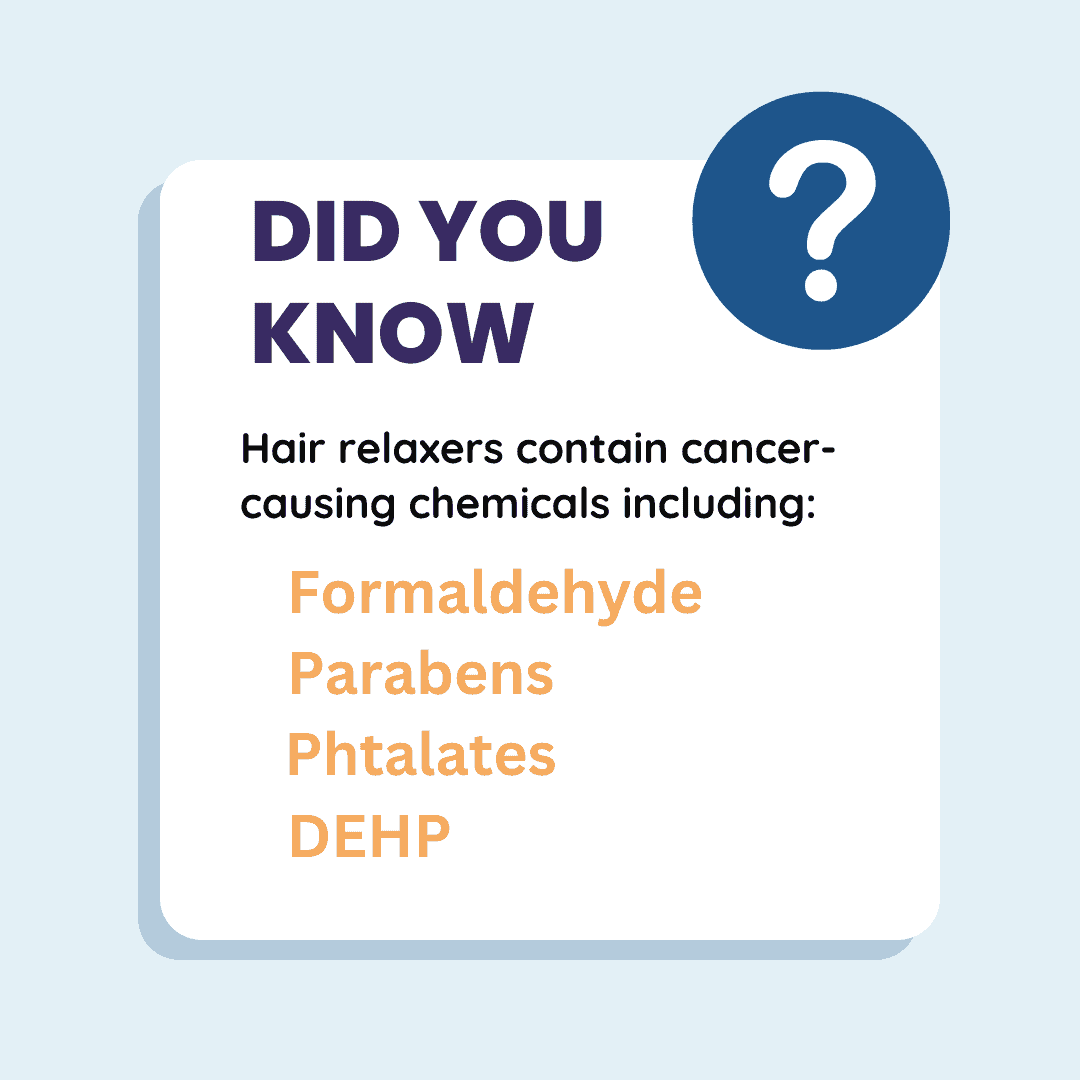
However, in the paper they note that several chemicals that have been found in straighteners (such as parabens, bisphenol A, metals, and formaldehyde) could be contributing to the increased uterine cancer risk observed. Chemical exposure from hair product use, especially straighteners, could be more concerning than other personal care products due to increased absorption through the scalp which may be exacerbated by burns and lesions caused by straighteners. In 2021, the BWHS found that Black women who used hair products containing lye, an ingredient typically found in salon relaxers, at least seven times a year for more than 15 years had a 30% increased risk of developing breast cancer. Among the 50,543 women who participated in the 25-year study, 2,311 participants had developed breast cancer, including 1,843 who developed invasive breast cancers, meaning the cancers spread into surrounding breast tissue. While Black women have a 4% lower incidence rate of breast cancer than white women, Black women have a 40% higher breast cancer death rate, according to the American Cancer Society.
There have been at least two key studies, one recently published by Boston University and another published last year by the National Institutes of Health (NIH), that showed a concerning connection between a higher frequency of use of hair straighteners and an increased risk of uterine cancer. The latter found that women who had endometrial cancer had higher concentrations of parabens in their endometrial tissue and phthalates in their urine samples. Parabens, phthalates and other chemicals that are often found in chemical hair straighteners pose a greater risk than other products because of scalp exposure, Bertrand said. Even other chemical hair straighteners marketed as safer to use, including no-lye relaxers, still pose potential risks.


Comments
Post a Comment